

Optimise your brain with an individualised program
Every client's route with us starts the same way: we need to understand what you're hoping to change and whether QEEG brain mapping or neurofeedback training is likely to help, before anything is booked. Our process works like this...
01 REGISTER YOUR INTEREST
The first step is to get in touch. Tell us as much as you can about your situation - it's what we use to assess whether we're likely to be able to help, and how quickly.
02 INITIAL ASSESSMENT (ESSENTIAL)
Before the first session, you will be asked to complete some online forms that include cognitive assessments and a health questionnaire.
There will then be a 1.5 hour session where we undertake a QEEG brain mapping exercise. You can find out more here.
Between 1-2 weeks later, we’ll have a 30-minute consultation to go through your results together and talk through a personalised training plan.
03 Brain TRAINING
You will then begin your Neurofeedback sessions. Find out more about Neurofeedback and what to expect here. We require 20 sessions, and at least one session per week is required but two is preferable. Each session takes about an hour from start to finish. If you wish to train more intensively you can have up to 3 sessions per week.
You will also be asked to complete a weekly symptom tracker to closely monitor your progress. After 20 sessions, you will have the option to continue with training if you wish to.
04 REPEAT ASSESSMENT (OPTIONAL)
After 20 sessions, you have the option to repeat brain mapping (QEEG) and cognitive assessment if desired to track progress against your goals.
05 Maintenance
Some of our clients, once they have completed their training program, like to keep in touch and have occasional 'top-up' sessions.

FOR MORE INFORMATION, SEE OUR FAQs
what happens in a neurofeedback session?
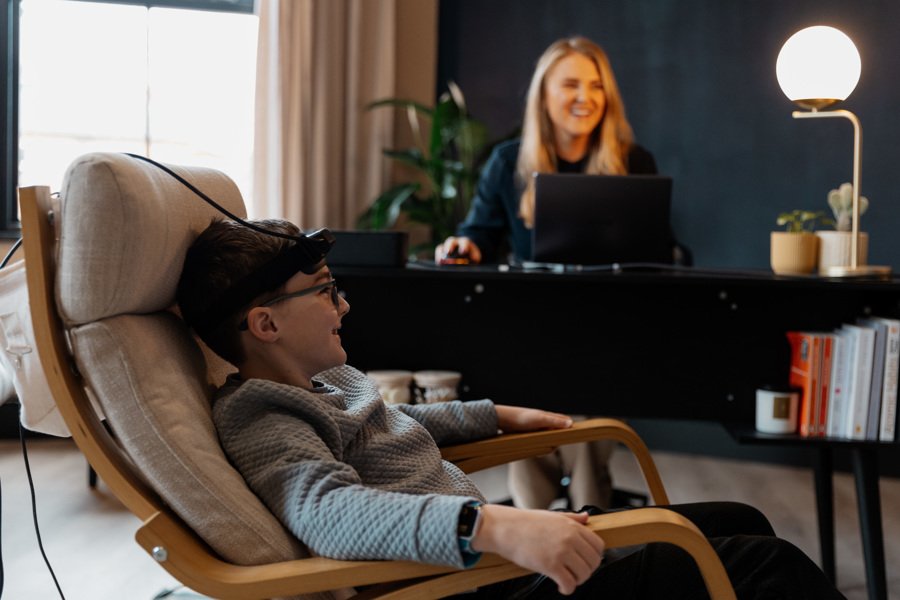
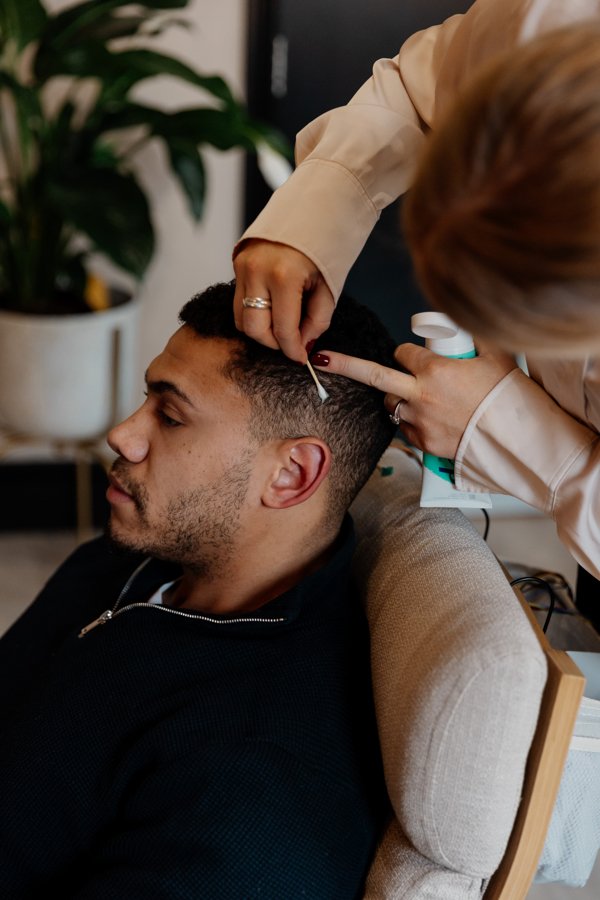
During a session, a few sensors are applied to your head with a sticky paste, which measures your brain's electrical activity by real-time electroencephalogram (EEG). These are processed and displayed on computer software.
You sit in a comfortable chair facing a large screen. The computer is connected to this screen and will show you visual feedback, such as a movie, an animation or a video game, which is modulated by your unique brain activity.
Through this feedback, the training software helps move your brain towards what may be associated with pleasant relaxation or calm focus, for example (depending on your individualised training plan). When the brain meets these parameters, this translates into a reward on the screen (brighter screen and colours, louder music). Your brain interprets this information and learns to adapt to obtain further rewards. Thanks to its 'neuroplasticity', the brain can more easily reach regulated states with more training and practice.


Is neurofeedback right for me?

Neurofeedback can be used for a variety of purposes and to address many conditions:
-
Neurofeedback can help individuals learn to control and reduce their stress and anxiety levels, manage
excessive worry or overthinking, regulate emotions, enhance well-being, and improve overall quality of life.
-
Neurofeedback can support children or adults who are experiencing specific symptoms related to cognitive performance, including attention, processing speed, cognitive efficiency and memory.
-
Neurofeedback can optimise performance in sports by enhancing focus, efficiency, mental resilience under stressful conditions, and head injury recovery.
-
Beyond addressing specific health concerns, Neurofeedback can optimise performance in business by improving focus, productivity, stress management, sleep quality and managing pressure/overwhelm.
If you have a brain you can train.
It can help anyone, from children to adults, to improve their brain function.



SIGN UP to
OUR Newsletter